Essential
Facts about Body Fat & Leading a Healthy Lifestyle
As the holiday parties have come and gone, the foremost
thought in most people’s mind is their health! Most
importantly, how to lead a healthy lifestyle and learn more
about body fat, weight, and muscle mass.
Body composition is the technical term used to describe
the different components that, when taken together, make
up a person's body weight. It is estimated that approximately
300,000 Americans die prematurely each year of diseases
related to obesity. Overweight and obese people face a clear
health risk. Obesity has been linked with numerous health
conditions including heart disease, high blood pressure,
diabetes, gall bladder disease, respiratory conditions,
complications of pregnancy, even certain cancers.
Is all Body Fat bad?
Everyone has some body fat. In fact, “essential”
body fat helps keep you healthy. It cushions and insulates
your joints, tissues and vital organs. It helps regulate
body temperature and stores important vitamins. It even
helps the body sustain itself when food is scarce. If you
have too little body fat, your body would start breaking
down muscle tissue for energy.
Body Composition
Not all body mass is the same – you are made of both
lean mass and fat mass:
• Lean mass: Includes vital organs, muscle,
and bone.
• Fat Mass: Is body fat.
You need a certain amount of body fat for good health. Your
ideal weight and fat-lean ratio varies considerably for
men and women and by age, but the minimum percent body fat
considered safe for good health is 5% for males and 12%
for females. The average adult body fat is closer to 15%-18%
for men and 22%-25% for women.
It helps the body store energy, insulates, and protects
lean mass. Too much body fat, however, is not healthy. Obesity
is defined as having an abnormally high proportion of body
fat. Obesity is known to be a risk factor for health problems.
Why Measure Body Fat?
The key to long-term weight management and better health
is building lean muscle and losing body fat. Being healthy
does not mean “getting skinny.” A thin person
can have an excess of body fat. A muscular person can technically
be overweight, but healthy. Getting and staying lean means
controlling your body fat percentage.
Measuring estimated body fat and weight together gives
you a more accurate picture of your total fitness. As part
of a fitness plan, it helps you set more realistic goals,
and better reflects a positive healthy change in your overall
body composition.
Exercise
Through regular exercise, you can lose weight by burning
fat. With diet alone, you lose weight by losing beneficial
muscle and bone tissue.
The American Heart Association recommends 30-60 minutes
of aerobic exercise 3-4 times a week to promote cardiovascular
fitness. It raises your heart rate, strengthening your heart
and lungs while you burn calories. To be effective, you
must reach and stay within your “target heart rate”
defined as 50-70% of your maximum heart rate. To calculate
your maximum heart rate, subtract your age from 220. To
determine your target heart rate, multiply your maximum
heart rate by 50-70%. If you raise your heart rate above
your target range, you will still get an aerobic benefit,
but you will NOT burn fat.
Fitness professionals recommend at least 30 minutes of
strength training 2-3 days a week. Resistance or Strength
Training firms the body and tones the muscles. While these
exercises, which include weight lifting, sit-ups, and toning,
do not directly burn fat, they do build muscle.
Muscle burns fats while you’re working out and while
you’re at rest. The more lean muscle mass you build,
the more easily your body can burn calories and reduce body
fat.
Your Healthy Lifestyle
Health and fitness isn’t just about counting calories
and cutting fat out of your diet. It is about a balanced
combination of eating right and exercising: neither dieting
nor exercising alone will give you the kind of results you
get when they are used together
To achieve a healthy lifestyle, you must set realistic
fitness goals and reduce the number of calories you take
in, regardless of whether they come from foods high in protein,
carbohydrates, etc. and include exercise in your regular
routine to lose weight faster by burning fat. Exercise makes
you feel better; it helps improve circulation, relieves
stress, and speeds up your metabolism.
So create a plan of exercise and diet appropriate for your
needs, body type, and general health……soon you
will see how this powerful combination makes it easier to
look and feel your best.
Helpful Exercise Tips
• Make exercise a habit. Choose a time every day –
even 30 minutes – and stick to it.
• Vary your workout. Mix up your activities to avoid
burn out.
• Recruit a friend – working out as a team keeps
you both motivated.
• Always talk to your health care provider/physician
before starting any exercise program.
Helpful Eating Tips
• Make sure no more than 30% of your daily calories
come from fat, with no more than 10% saturated
fat.
• Never skip meals – instead, eat sensible portions
at every meal and use small, low calorie snacks
between meals to help control hunger.
• Balance your calorie intake with your activity level.
Eat less on low activity days than you do on
days where you enjoy rigorous exercise.
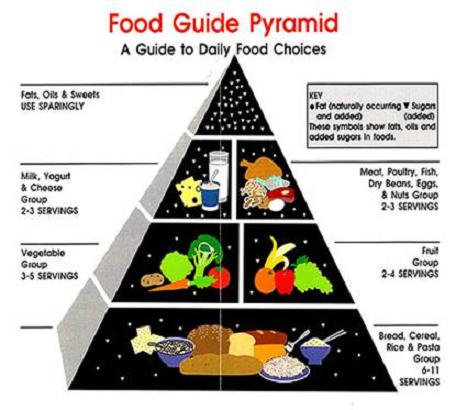
• Follow the USDA’s Food Pyramid seen below
as your guide to a healthy, balanced eating
plan.