Washington, Nov 18, 2004
PTI
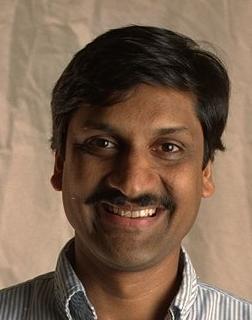
An Indian American scientist at the Massachusetts Institute of Technology
(MIT) is working on a project aimed at making hand-held computing "as
easy as breathing." Anant Agarwal, a professor and researcher at
the MIT, is involved in 'Project Oxygen' along with 149 other researchers,
The Washington Post reported today.
At the centre of the research, which is in its fifth year, is a reprogrammable
chip called RAW, for "raw architecture workstation". It is
one of many key pieces in MIT's USD50 million project funded partly
by the Defence Advanced Research: Projects Agency of the Pentagon, which
develoved the Internet and achieved many other major breakthroughs.
Agarwal, said the Post, wants to redesign chip software and hardware
for the mobile age, creating chips that will be chameleon-like, fulfilling
many purposes, so that people could get more done with less gear. It
will theoretically make computing more mobile.
Also, devices embedded in "intelligent" rooms and stationary
objects could accomplish more by simply retrieving new instruction sets.
"Call it a universal logic chip that can do anything," Agarwal
told the Post.
The goal of the project is to create a new computing environment, in
which computer capability would be ubiquitous and manipulating computers
as easy for people as breathing, the paper said.
Project Oxygen resechers want people to throw away the mouse and talk
to their computers, some of which would be embedded in walls and ceilings.
Anant Agarwal is a professor in the MIT EECS department, and a member
of CSAIL. He is a fearless leader of Raw, which is a project in the
Computer Architecture Group (CAG) within CSAIL. He hacks on WebSim in
his spare time. WebSim is a prototype of a web-based electronic circuits
laboratory. His other projects include LOUD, Oxygen, Alewife, Virtual
Wires, and Fugu.