Toronto, Oct. 14, 2008
Balraj Tandon
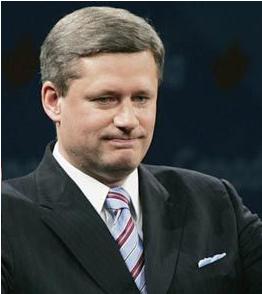
Stephen Harper, Canadian Prime Minister, has led his Conservative
Party to victory but Canada's third minority government in four
years. Harper's Conservatives defeated a Liberal minority government
in the January 2006 election.
At least 155 seats are needed to form a majority in the 308-seat
House of Commons.
- The Liberal Party win 77 seats, down from 95 seats.
- Bloc Quebecois appeared likely to get 49 seats.
- The New Democrats 37
- Iindependent candidates 2.
Stephen Harper had called elections early in the hope of getting
his party a majority, but the Conservatives sought to put a good
face on the results, pointing to their increased number of seats.
Health Minister Tony Clement told Global Television, "We
were expecting a minority government. It looks like it will be
a strengthened one. We're going to get right back to work, that's
what people expect us to do."
Conservative MP Jason Kenney said, "Every other incumbent
government in the Western world is in serious political trouble
with the economic situation."
He lost elections in 2004, and a commanding lead in 2006, after
the Liberals accused him of having a ``hidden agenda'' to terminate
federal programs and implement culturally conservative measures
including restrictions on abortion.
Stephen Joseph Harper PC MP was born in 1959. He is the twenty-second
and current Prime Minister of Canada, and leader of the Conservative
Party of Canada. Harper became Prime Minister after his party
won a minority government in the January 2006 federal election.
He is the first Prime Minister from his current political party,
and the first since 1993 from any Conservative party, following
twelve years of government by the Liberal Party. Harper is the
first Canadian prime minister born in the second half of the twentieth
century.


 Chandigarh, November 7, 2012-