|
Pravasi Bharatiya Divas 2008
- New Delhi |
|
 |
UPDATE
Health,
Education and Investment focus at PBD Day 2-
Malaysian investors could undertake 70-75% of the total project
investments
New Delhi, Jan 08, 2007
Surinder Mehta
Two Plenary sessions and three concurrent sessions carried forward
the agenda on Day 2 of the 6th Pravasi Bharatiya Divas, jointly
organized by the Ministry of Overseas Indian Affairs, the Government
of the NCT of Delhi and the Confederation of Indian Industry in
New Delhi. Social development, especially with respect to women's
empowerment, health and education, as well as culture, investment
and infrastructure were the focal areas of the day.
- At the plenary session 'Social Development Challenges
in India: Health and Education', Dr Montek Singh Ahluwalia,
Deputy Chairman, Planning Commission, Government of India announced
that the Central Government is ready to fund 75% of the health
insurance premium for people below the poverty line. The Government
has increased the outlay on these sectors in the 11th Five-Year
Plan for provision of healthcare services from 1% to 2% of GDP
and that on education from 7.8% to 19.4% of GDP.
- Ms Rajashree Birla, Chairperson, Aditya Birla Centre,
underscored the enormous potential for PIOs to render support
in areas such as medical research, telemedicine, scholarships
and partnerships with other government and non-governmental
agencies. Mr Analjit Singh, Chairman, Max India Group of Companies,
India stressed on developing infrastructure to ensure better
provision of healthcare to rural India. Detailing the various
initiatives of the Sankara Nethralaya such as teleophthalmology,
Dr S S Badrinath, Chairman Emeritus, Sankara Nethralaya encouraged
the diaspora to provide similar facilities in other parts of
the country.
- Association of Physicians of Indian Origin, USA: Dr
Hemant Kumar Patel, President, Association of Physicians of
Indian Origin, USA and Prof Dr Ruby Pawankar, Nippon Medical
School, Japan & Treasurer, Board of Directors, World Allergy
Organization; Chair, ARIA-WHO Initiative Asia Pacific Affiliate,
Director, Asian Allergy Asthma Foundation, Japan also outlined
the concerted endeavours of NRIs and PIOs for the development
of healthcare services in India including effective delivery
of rural healthcare. Dr Thomas Abraham Chairman, GOPIO Inc,
USA recommended setting up of a Facilitation Centre for Social
Development by the Ministry of Overseas Indian Affairs to channel
funds for social development. Prof Deepak Nayyar, Member, Knowledge
Commission and former Vice-Chancellor, University of Delhi,
India suggested that the principal challenges in social development
of India could be addressed through improving the access and
delivery mechanisms and by ensuring expansion, excellence and
inclusion in the education sector.
- Plenary 2 focused on Investment and Infrastructure.
Mr Priyaranjan Dasmunshi, Minister of Information and Broadcasting
and Parliamentary Affairs, "India stands at the threshold
of an unprecedented growth," offering huge investment potential
in the infrastructure sector. Upholding democratic values and
accountability, environmental sustainable growth and interests
of the common people of the country are a priority. He highlighted
developments under the Prime Minister's Gram Sadak Yojana over
the last three to four years in building roads and connecting
rural India with the mainstream.
- Dato Seri S Samy Vellu, Cabinet Minister of Works,
Government of Malaysia & President, Malaysian Indian Congress,
proposed 'intercity expressways' as a first step of involvement
of Malaysian investors in India. Malaysian government would
also support these projects in India, he said. He assured that
Malaysian investors could undertake 70-75% of the total project
investments. Malaysian companies can also build townships in
India. He ended with the hope that people of Indian origin in
Malaysia would change the infrastructure landscape in India.
- Mr Sunil Kant Munjal, Chairman, Hero Group,
said that there are many positives for the Indian economy, but
infrastructure challenges should be overcome to ensure a steady
and high growth in India. Mr G V Sanjay Reddy, Panel Member
and Vice-Chairman, GVK Group, India spoke of the enormous changes
in infrastructure scenario in India. Mr M Rajaram, panellist
and Chairman, Singapore India Chamber of Commerce and Senior
Director, Straights Law Practice LLC, Singapore noted that there
is 'infrastructure deficit' in India and this is an opportunity
for investors. The PPP concept should be extended to PPPP, or
the Pravasi Public Private Partnership, he said. He suggested
a 'fund based' approach of financing infrastructure projects
in India. Mr Vinayak Chatterje, panellist and Managing Director,
Feedback Ventures, pointed out that infrastructure has been
the most regulated sector in India. The major lacunae are the
lack of 'bankable projects' and non-availability of finance
in this sector.
- Ms Meira Kumar, Hon'ble Minister for Social Justice
and Empowerment "Gender equality is essential
for social justice," at the concurrent session on Challenges
in Women Empowerment and Leadership. Ms Kumar stressed on the
factors of education, right to information, "legal protection
combined with social awareness" as key to women empowerment.
- Dr Girija Vyas, Chairperson, National Commission for
Women, India said that the biggest hurdle to women
empowerment is education and literacy. Ms Brinda Karat, Member
of Parliament, Rajya Sabha called for starting a "political
process of disempowerment of forces" who use education
and awareness as tools to connive in women harassment, abuse
and torture. Expressing her concern over the issues of fraudulent
NRI marriages, abuse of women domestic help overseas, Ms Karat
called for the signing of the Hague Convention of International
Laws. Ms Krishna Tirath, Member of Parliament, Lok Sabha also
reiterated that women should be empowered socially, politically
and economically. Ms Mallika Sarabhai, the noted danseuse and
social activist asked for a change of "patriarchal, traditional
mindset" for any law to be fruitful. Ms Anu Peshwaria,
President, Seva Legal Aid Organisation, USA, and Ms Rohini Muthuswami,
Coordinator, ASHA India, called for more legal and educational
awareness and access for women.
- Dr. Kapila Vatsyayan, Former Secretary Department
of Culture, Ministry of Human Resource Development, Government
of India, said Indian culture should be extended geographically
and dimensionally throughout the whole world and Indian diaspora
has a big role to play in it. Ms. Ambika Soni, Minister of Arts
and Culture, promised to encourage the institutions and training
centers promoting cultural activity by monetary support and
other supports. She also proposed district level museums emphasized
the need of pooling diaspora resources of manpower, expertise
and funding to promote Indian culture globally so the world
can experience the rich tradition of Indian culture.
- Dr. Shashi Tharoor, the writer and former UN Under
Secretary General, urged the private sector to join
hands with Government to build infrastructure and institutions
to promote India's culture. Indian diaspora should defend, preserve
and promote culture globally.
- Mr. Mahendra Gowressoo, Minister of Arts and Culture,
Mauritius, acknowledged the diversity of Indian culture and
its impact on social and economic development of Chota Bharat
i.e. Mauritius. He also said that Overseas Indians should collaborate
with greater effort to empower Indian culture globally. Dr.
M.J Warsi, Department of Asian and Near Eastern Languages &
Literature, University of Washington, USA urged forming a committee
to support cultural promotion with the help of the Government
and Indian diaspora.
- Mr. Shekhar Kapoor, the Film Producer and Director,
said that technology and media are the main mechanisms to deliver
culture. As Indian consumers are coming to the center of the
world, India's culture is also increasingly impacting world
culture.
- On Knowledge Economy- Mr Kapil
Sibal, Minister for Science and Technology and Earth Sciences
underscored the need for developing an eco-system of
education excellence with in-built features to meet differential
regional requirements. Classifying conversion of financial budgetary
allocation to its tangible utilisation as a challenge, he emphasized
the role of the diaspora in leveraging the knowledge integration
of the Indian economy into the global economy.
- Outlining the Government's initiatives and commitment
in building and sustaining knowledge capacity, Dr Sam
Pitroda, Chairman, National Knowledge Commission, explained
the role of the National Knowledge Commission and spoke about
the five-fold increase for education under the 11th 5-year plan.
He urged the diaspora to come forward and encourage the formulation
of Public Private Partnerships.
- Dr Balaji Sadasivan, Senior Minister of State, Ministry
of Foreign Affairs and Ministry of Information, Communications
and the Arts, Singapore recommended that Singapore
could serve as an extension in East and South East Asia by providing
an apt environment for corporate growth. Dato Vijay Eswaran,
Group Managing Director, Qi Group of Companies, Hong Kong, enumerated
that apart from the pertinent issue of setting the knowledge
agenda, it was also necessary to design its implementation plan.
Mr Ravi Seethapathy, Chair, Shastri Indo-Canadian Institute,
Canada, highlighted knowledge approach, exchange, management
and network as the primary mechanics for addressing issues like
NGO and local empowerment.
Citing the levitating aspiration levels of individuals, Dr Som
Mittal, President, NASSCOM, felt that the real challenge lay not
just in building literacy capacity but also in transforming this
capacity for utilization by industry. Mr Vijay K Thadani, Chief
Executive Officer, NIIT Ltd, India emphasized the need to boost
employability both within and outside India. Mr R R Shah, Former
Member-Secretary, Planning Commission, suggested a multi-pronged
approach encompassing implementation, innovation and skills development
in building India as a knowledge economy.

|
|
|
|
|
|
| |
| 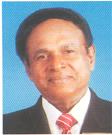
Dato Seri S Samy Vellu, Cabinet Minister of Works, Government
of Malaysia & President, Malaysian Indian Congress
Malaysian investors could undertake 70-75% of the total project
investments
|
|